
Kode 2 P

 HIKE & FLY
 LEISUREHIKE & FLYLEISURE
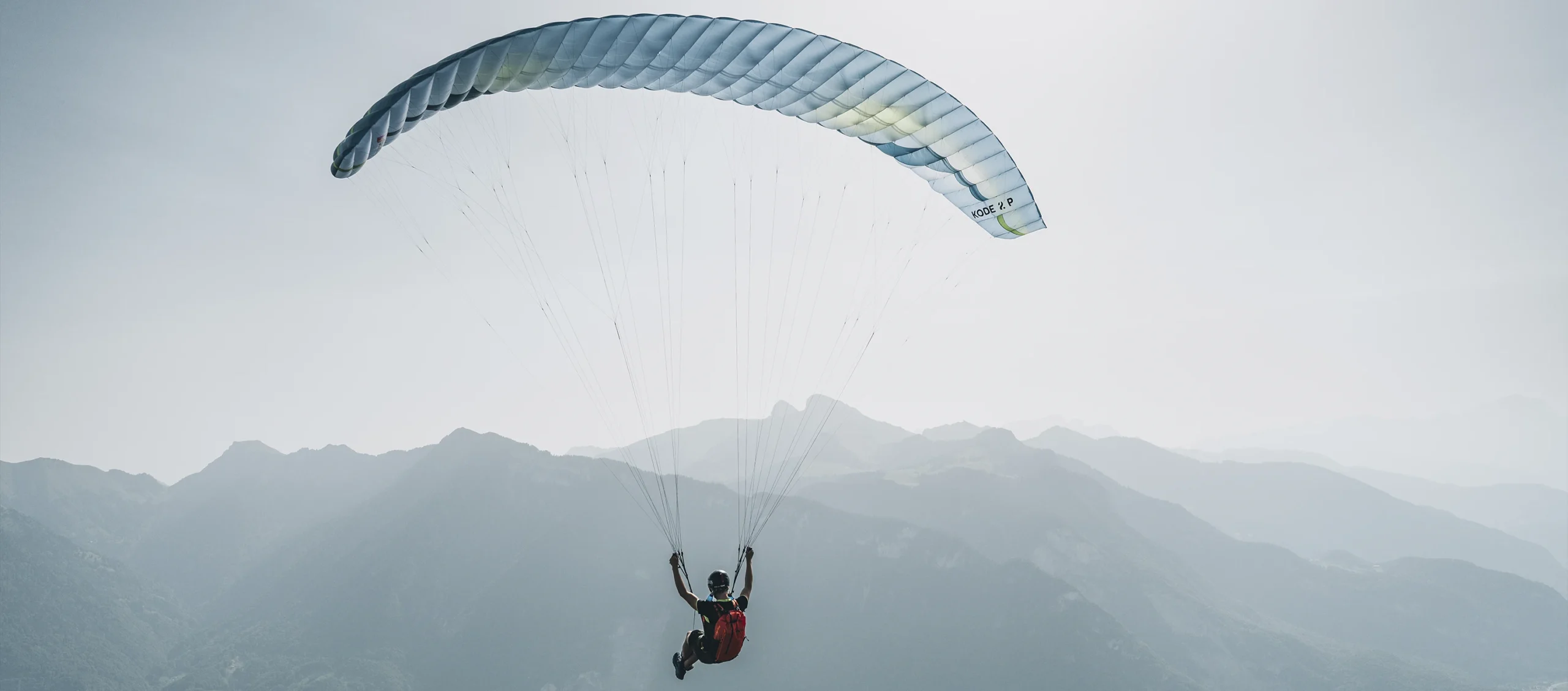
The Kode 2 P is an ultralight and accessible mountain wing, designed for hike and fly. It retains the free and playful spirit of its predecessor, with greater pitch and roll stability and improved low-speed behaviour.
Refined in every detail, it is even more intuitive and easy to control. Highly versatile and available in a wide range of sizes to suit every type of pilot and adventure
Hike & Fly
Ultralight and compact, the Kode 2 P is ready to launch and land from any terrain. It is the perfect wing to instil confidence on all your hike & fly adventures.
Leisure
The great versatility of the Kode 2 P enables to all kinds of adventures, always offering comfortable, accessible and controlled handling.
Hike & Fly Fun
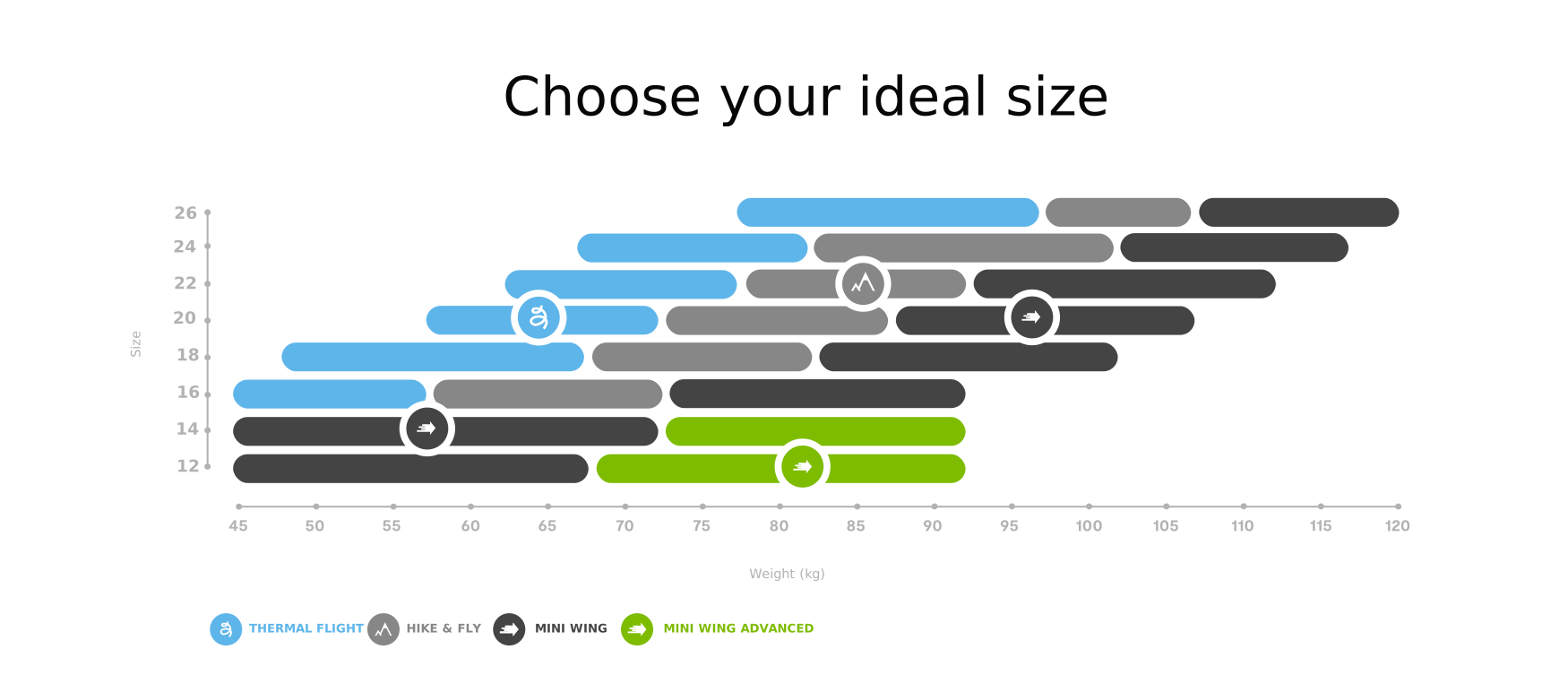
The small sizes 12–14, as well as the intermediate sizes 16–18 when flown near their maximum wing loading, are intended for experienced pilots with active flying skills. The wing’s behaviour varies according to weight, becoming much more reactive and dynamic.


The Kode 2 P is a highly versatile wing, whose handling changes depending on size and wing loading. Sizes 22, 24, and 26 are easy, pleasant, and docile; whereas sizes 16, 18, and 20 have a more dynamic and responsive character, especially when flown near the upper end of their weight range. The smallest sizes (12 and 14), which are mini-wings, are more agile and playful, with greater sensitivity to pilot inputs and weight shift.
It is a very stable wing in any size, especially well controlled in roll, thanks to the optimised arc.
The undersurface is made with the new ultralight and durable N10 22 g fabric, reducing the total weight of the wing and making it more compact.
Now, all sizes share the same risers – lighter yet just as easy to handle – which further reduces weight without compromising functionality.
The brake has been optimised to provide clearer, more progressive feedback, especially at lower speeds. It is easier to feel when the wing is approaching the stall point, allowing the pilot to anticipate and maintain control without causing an unintentional stall.
Handling remains accessible and intuitive, even in turbulent conditions. Transitions are smooth, turns are pleasant and climbing in thermals is efficient.
Inflation is smooth and progressive, even in zero wind. Compared to the previous model, the wing rises even more easily, allowing for quick take offs.
During landing, the final flight phase is straightforward and controlled, thanks to the brake precision. Land confidently in tight or technical spots without difficulty.
The Kode 2 P is a highly versatile wing, whose handling changes depending on size and wing loading. Sizes 22, 24, and 26 are easy, pleasant, and docile; whereas sizes 16, 18, and 20 have a more dynamic and responsive character, especially when flown near the upper end of their weight range. The smallest sizes (12 and 14), which are mini-wings, are more agile and playful, with greater sensitivity to pilot inputs and weight shift.
It is a very stable wing in any size, especially well controlled in roll, thanks to the optimised arc.
The undersurface is made with the new ultralight and durable N10 22 g fabric, reducing the total weight of the wing and making it more compact.
Now, all sizes share the same risers – lighter yet just as easy to handle – which further reduces weight without compromising functionality.
The brake has been optimised to provide clearer, more progressive feedback, especially at lower speeds. It is easier to feel when the wing is approaching the stall point, allowing the pilot to anticipate and maintain control without causing an unintentional stall.
Handling remains accessible and intuitive, even in turbulent conditions. Transitions are smooth, turns are pleasant and climbing in thermals is efficient.
Inflation is smooth and progressive, even in zero wind. Compared to the previous model, the wing rises even more easily, allowing for quick take offs.
During landing, the final flight phase is straightforward and controlled, thanks to the brake precision. Land confidently in tight or technical spots without difficulty.
3DL technology is an adjustment of the fabric at the leading edge of the wing to control the ballooning and the creases that are generated by the curvature in this area. The leading edge is then divided into sub-panels which are sewn into each of the cells at the front of the paraglider. As a result, the leading edge of the wing is perfectly tensioned, which benefits the wing in performance and durability.
A good comparison is a rugby ball. In order to produce its characteristic oval shape without creases, its cover is made of several panels – not of just one piece.
The application of this innovation, in conjunction with the 3DP, is key to converting the perfect shape from 2D to 3D.
The RAM Air Intake system is based on the inward orientation of the air inlets in the profile so that they allow an optimum internal pressure at all angles of attack.
The result? Having greater internal pressure means better buffering of turbulence, greater consistency of the profile shape across the speed range. Excellent handling at low speed is achieved by allowing the pilot to extend the braking limit, so there is a lower risk of collapse and consequently, greater control and stability.
This technology seeks to implement the best orientation of the cloth on each panel according to its location on the leading edge. If the cloth pattern is correctly aligned with the load axes, the cloth suffers less deformation flight after flight, so the leading edge maintains its shape better and remains stronger over time.
The design of our paraglider and paramotor wings has evolved a lot over the years, with a positive and specific focus on the leading edge.
Thanks to this technology and 3DL, a perfect modelling of the panels and an exact representation from 2D to 3D is achieved.
The IKS (Interlock System) is a system to connect the risers with different parts of the wing, such as the lines, the harness or the parachute. This technology stands out for its innovation in lightness, optimising both the glider and the equipment in general, without compromising efficiency or the level of safety.
Niviuk has developed three variants: the IKS 1000, the Easy IKS 2500 and the IKS 3000, each intended to connect different parts of the paraglider.
✓ IKS 1000: risers to lines
The IKS 1000 is designed to connect risers to the lines. It can carry up to 1055 kg, which is far more than the 550 kg of the classic 3 mm maillons, but weighs much less. This makes it an essential part of our entire range of P Series (plume/light) wings, which already come with this technology as standard.
✓ Easy IKS 2500: risers to harness
The Easy IKS 2500 is a lightweight attachment system designed to connect the risers to the harness. It can carry up to 2673 kg and is made of Dyneema, making it very strong and durable. It is the perfect ultra-lightweight alternative to the twist-lock aluminium carabiner (with a maximum load of 2000 kg). The design and application of this connector makes it ideal for mountain harnesses and wings, and light flying gear.
Watch here the video tutorial with the user manual to learn how to use the Easy IKS 2500.
Download the Easy IKS 2500 certification report here.
✓ IKS 3000: parachute to harness
Finally, the IKS 3000 is used to connect the parachute to the harness. It can also be used to connect the risers to the harness, as an alternative to the Easy IKS 2500. It can carry up to 2960 kg, making it an ultra-light alternative to the 7 mm maillon (which can carry 3125 kg) or the twist-lock aluminium carabiner (with a maximum load of 2000 kg). The design and application of this connector is ideal for mountain wings and lightweight equipment.
Nitinol is a combination of 50% nickel and 50% titanium. The incorporation of Nitinol rods in the profile increases the performance of the wing, especially in three areas:
- Compared to nylon rods, the weight of the wing is reduced by 13%.
- Nitinol has two essential characteristics: shape memory and enormous elasticity. As a result, the rods retain their optimum shape even after an ultra-compact or incorrect folding, so that the wing is not deformed. This will always be the case unless the radius at the point of curvature is less than 1 cm.
- The leading edge shape is much more rigid and uniform which results in a much more consistent and progressive inflation and therefore an easier take off. The profile is taut at all times, without creases, and fully optimised for all flight phases.
In addition, the rods have a plastic protector at their ends to prevent any damage to the fabric of the wing.
Nitinol is now featured in all our wings.
The Kode 2 P features a completely redesigned construction, with more diagonals and a new load distribution. At a glance, it’s simpler and easier to understand. The structure has been optimised to achieve maximum strength with minimal material, while maintaining durability.
Thanks to the new internal distribution, the number of lines has been reduced — up to 56 fewer lines. The line plan is clearer, with fewer branches, making it easier to check before launch.
The arc has been redesigned, making it more pronounced and flatter in the central part, especially in sizes 20 and above. This contributes to greater roll stability and improved control in turns.
The Kode 2 P comes with IKS 1000 connectors to join the risers to the lines as standard. This system can withstand up to 1,055 kg and is much lighter than a carabiner, which helps reduce the total weight of the equipment without compromising safety or strength.
The ultra-thin Nitinol rods integrated into the leading edge offer exceptional durability and help the wing retain its shape over time.



| 12 | 14 | 16 | 18 | 20 | 22 | 24 | 26 | |||
|---|---|---|---|---|---|---|---|---|---|---|
| CELLS | NUMBER | 34 | 34 | 34 | 34 | 34 | 34 | 34 | 34 | |
| ASPECT RATIO | FLAT | 4,60 | 4,60 | 4,60 | 4,60 | 4,60 | 4,60 | 4,60 | 4,60 | |
| PROJECTED | 3,80 | 3,80 | 3,80 | 3,80 | 3,80 | 3,80 | 3,80 | 3,80 | ||
| AREA | FLAT | m² | 12,50 | 14 | 16 | 18 | 20 | 22 | 24 | 26,50 |
| PROJECTED | m² | 11,22 | 12,56 | 14,36 | 16,02 | 17,68 | 19,45 | 21,22 | 23,43 | |
| SPAN | FLAT | m | 7,58 | 8,02 | 8,58 | 9,01 | 9,59 | 10,06 | 10,50 | 11,04 |
| CHORD | MAXIMUM | m | 2,01 | 2,13 | 2,27 | 2,41 | 2,54 | 2,67 | 2,79 | 2,93 |
| LINES | TOTAL | m | 190 | 202 | 216 | 229 | 241 | 254 | 265 | 279 |
| MAIN | 2+1/3/2 | 2+1/3/2 | 2+1/3/2 | 2+1/3/2 | 2+1/3/2 | 2+1/3/2 | 2+1/3/2 | 2+1/3/2 | ||
| RISERS | NUMBER | A-A’/B/C | A-A’/B/C | A-A’/B/C | A-A’/B/C | A-A’/B/C | A-A’/B/C | A-A’/B/C | A-A’/B/C | |
| GLIDER WEIGHT | kg | * | 1,64* | 1,80* | 1,97 | 2,15 | 2,31 | 2,52 | 2,66 | |
| CERTIFICATION |
EN 926-1
Max. 90 kg |
–
|
–
|
–
|
–
|
–
|
–
|
–
|
||
| WEIGHT RANGE EN/LTF A | kg | – | – | – | 50-75 | 60-85 | 65-90 | 70-100 | 90-119 | |
| WEIGHT RANGE EN/LTF B | kg | – | – | – | – | 85-105 | – | – | – | |
| WEIGHT RANGE EN/LTF C | kg | – | 50-85* | 50-85 | 75-100 | – | – | – | – |
* To be confirmed.
The total weight of the wing may differ ±5% due to variations in the weight of the fabric supplied by the manufacturers.
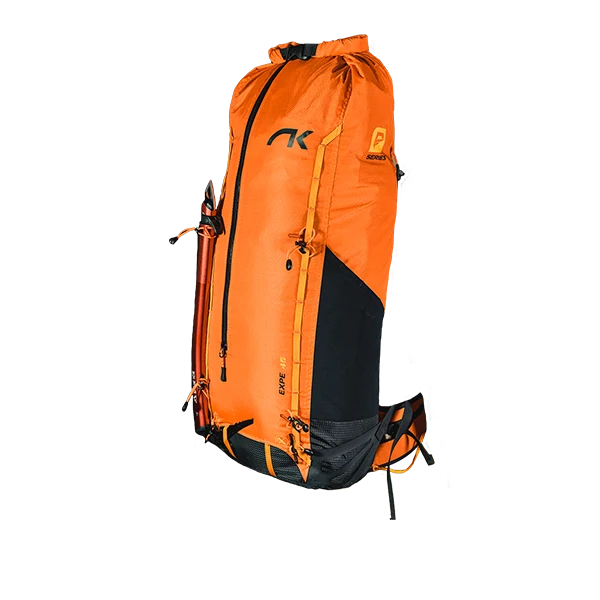

Kode 2 P
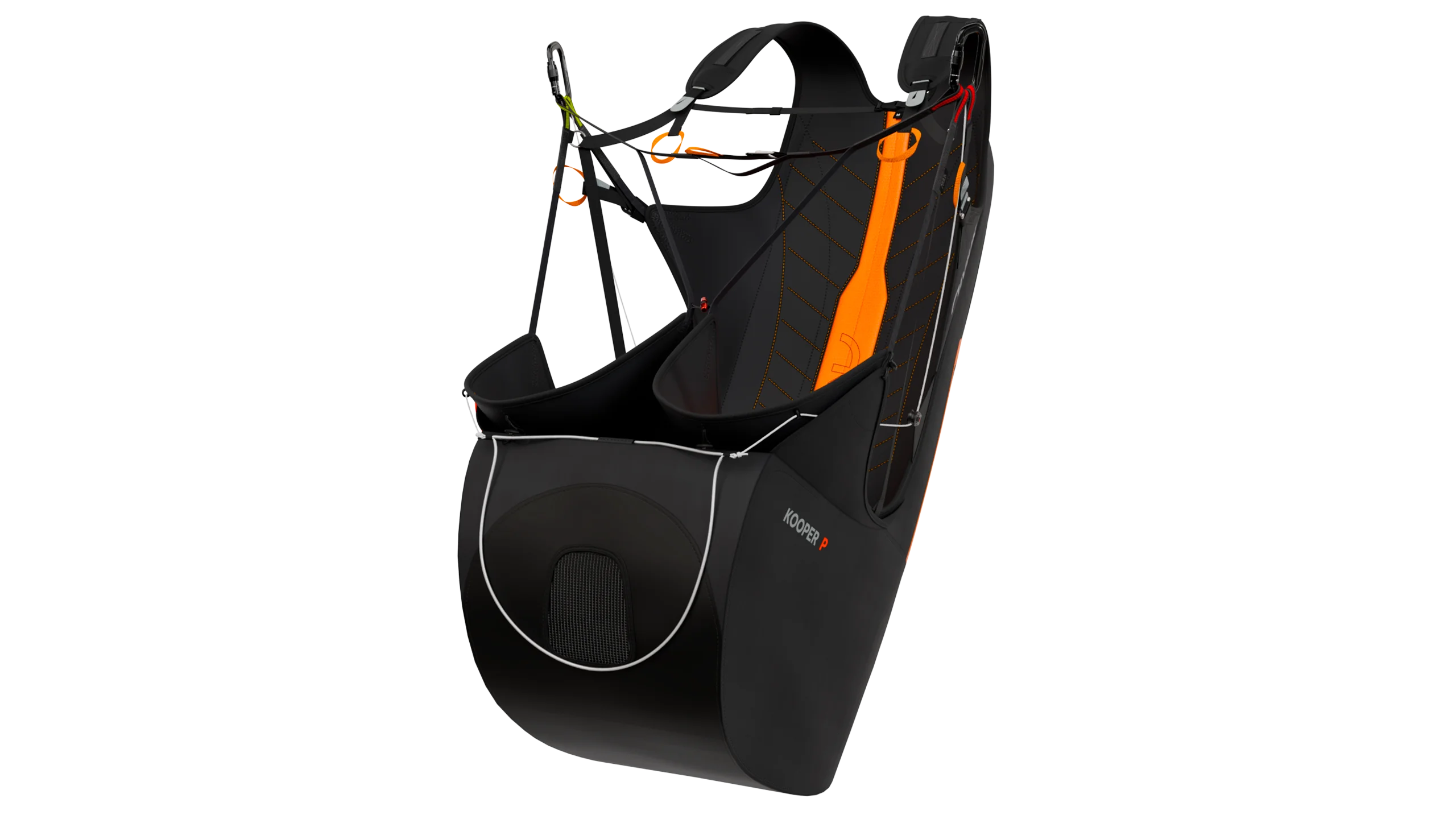
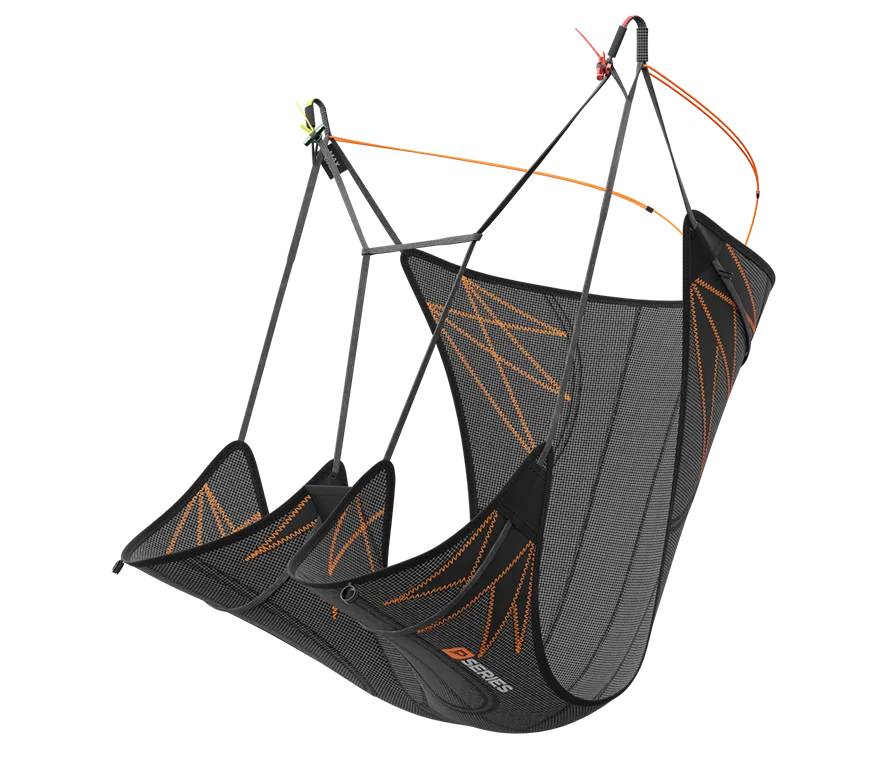
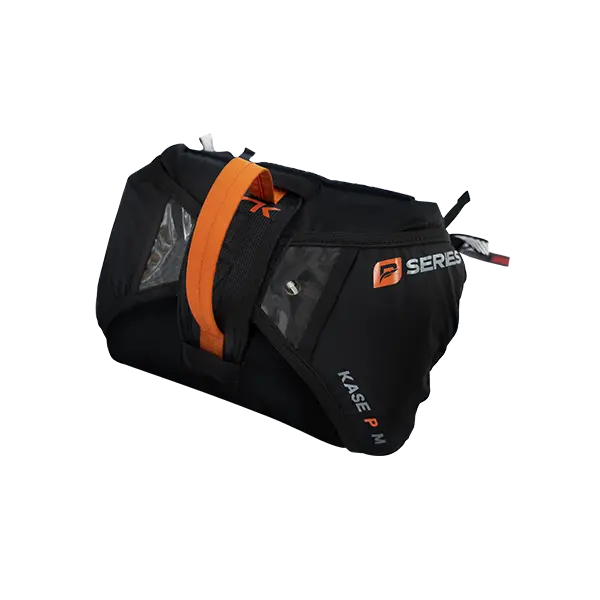
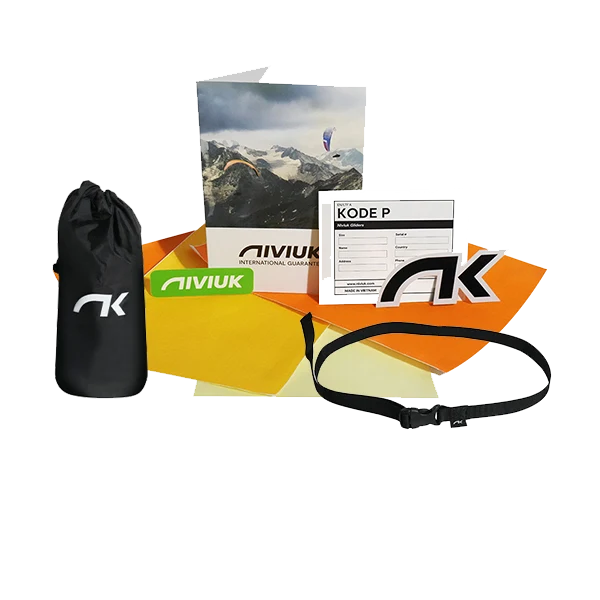
It contains an 8-digit code that, when entered in the MyNiviuk section, can be used for product registration, to carry out procedures and request maintenance.


