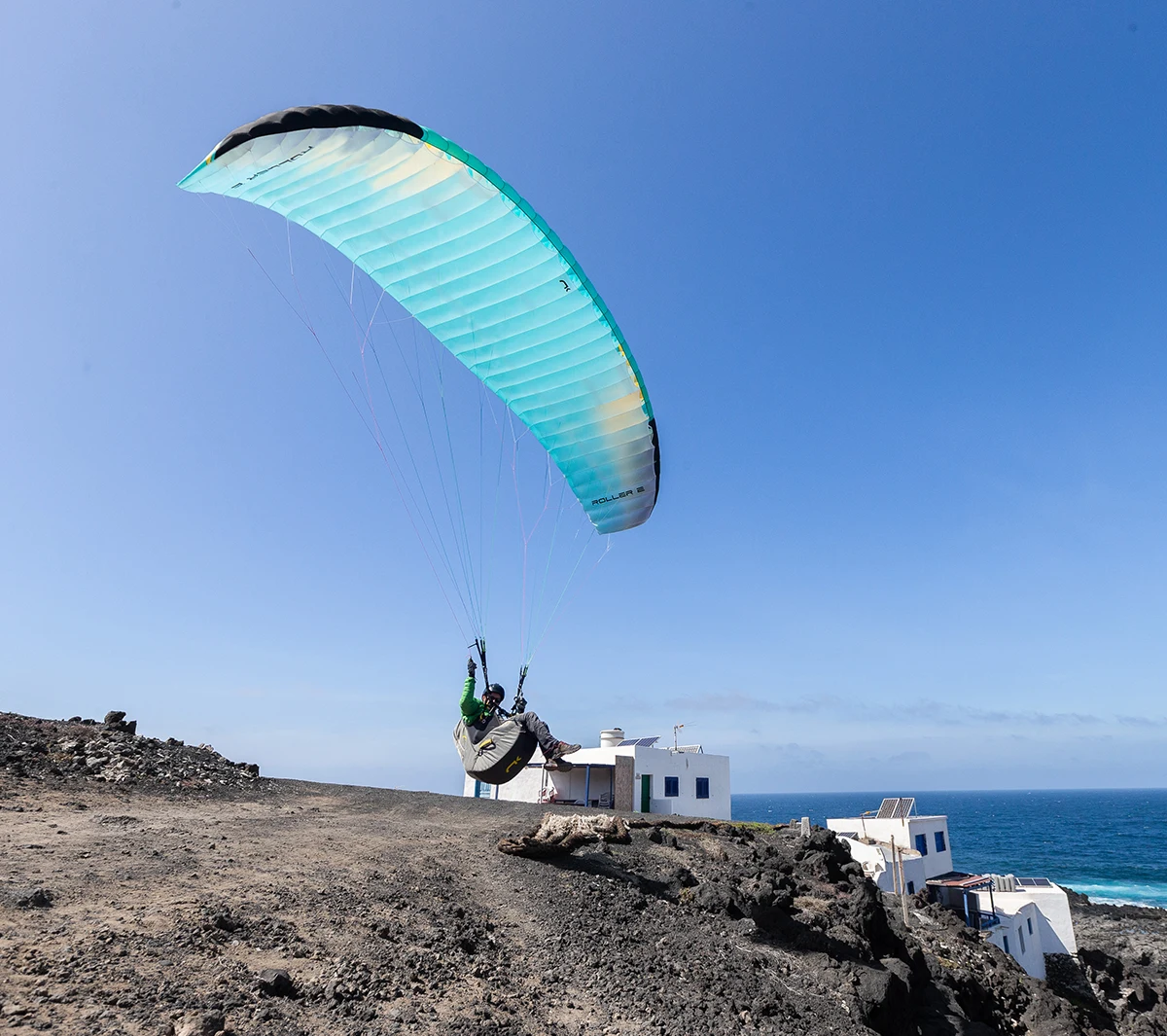
Easy and progressive inflation which allows a simple launch. Landings are smooth and controlled thanks to perfect speed retention.
Roller 2
EN 926-1
3-LINER
 SPEED WINGS
Begginer
Intermediate
High
SERIAL
EN 926-1
3-LINER
Begginer
Intermediate
High
SPEED WINGS
SERIAL
PUSH YOUR LIMITS
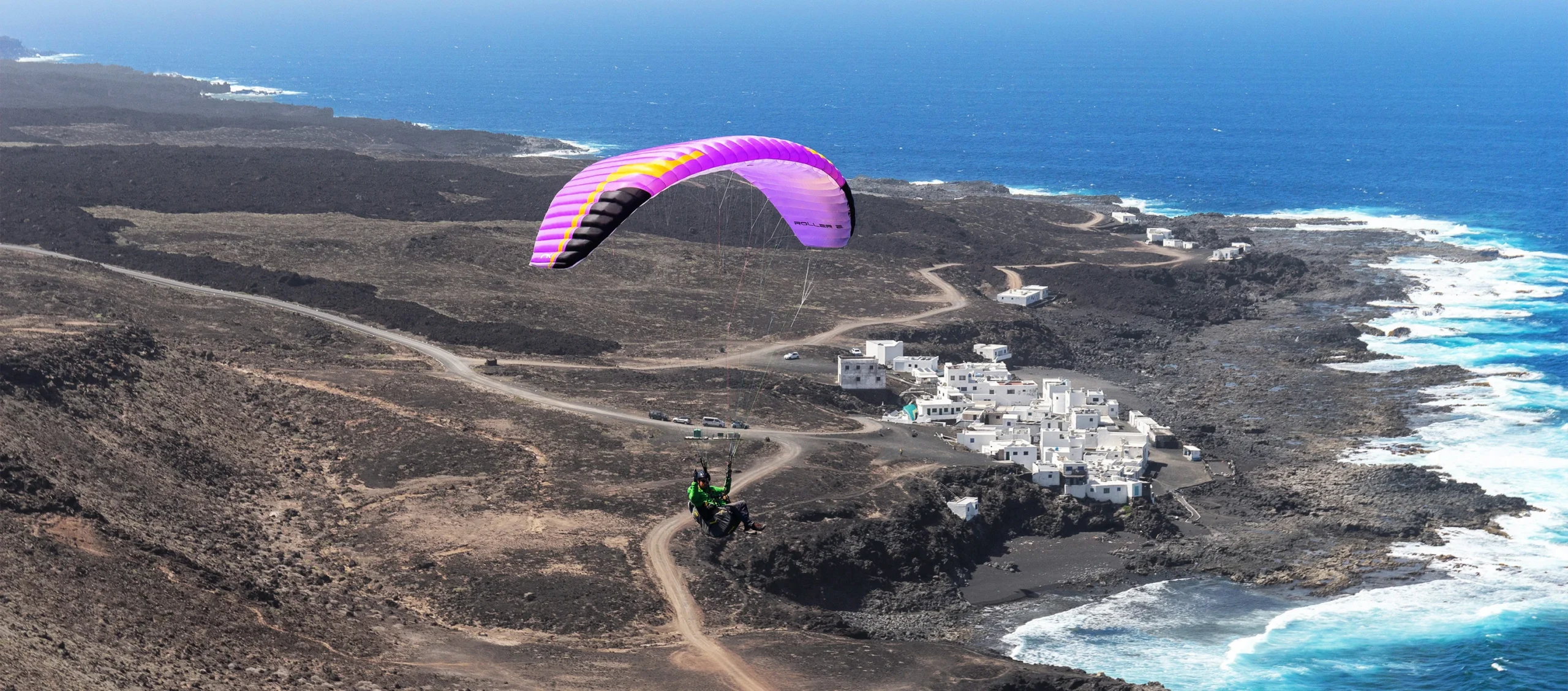
Expand your horizons. The new model of our mini wing will exceed all your expectations. The Roller 2 is synonymous with speed, precision and manoeuvrability, all integrated into an accessible and surprisingly versatile wing.
A major advance in speed flying; safety above all else
The perfect balance between dynamics, design and high performance
Speed, balance and dynamism
Target
Speed flying
The Roller 2 is a mini wing with a very extensive speed range. Specially designed for speed flying, it is stable, light, manoeuvrable and can be flown quickly and precisely at all times.
Roller 2
In detail
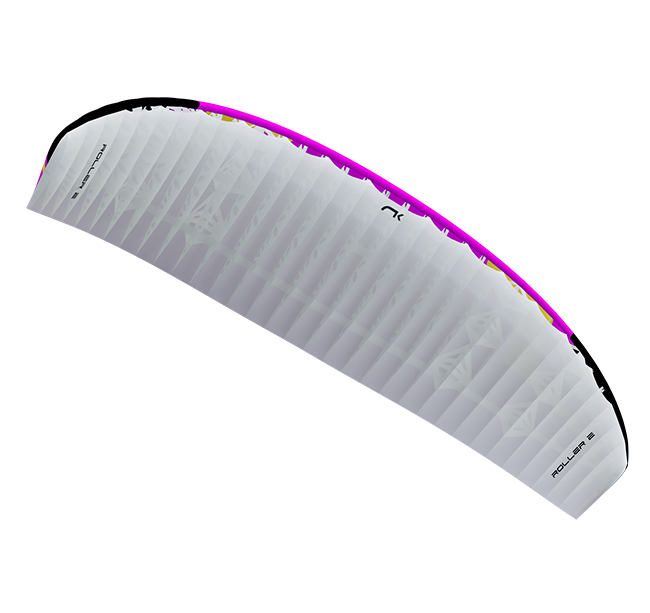
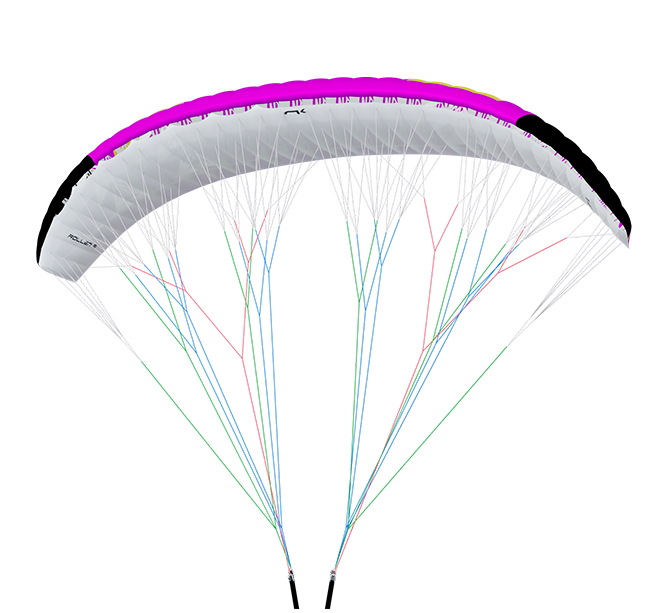
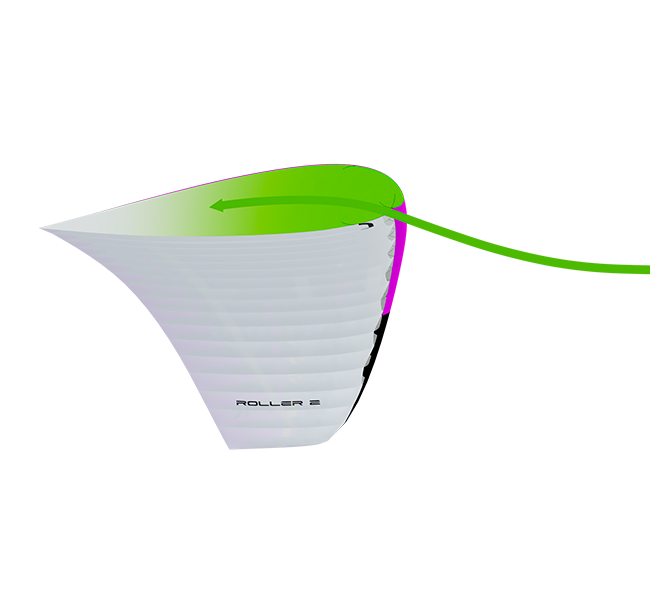
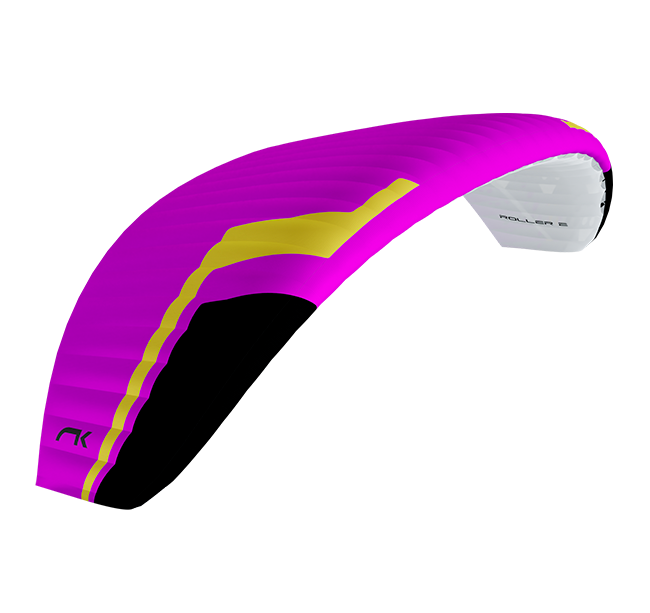
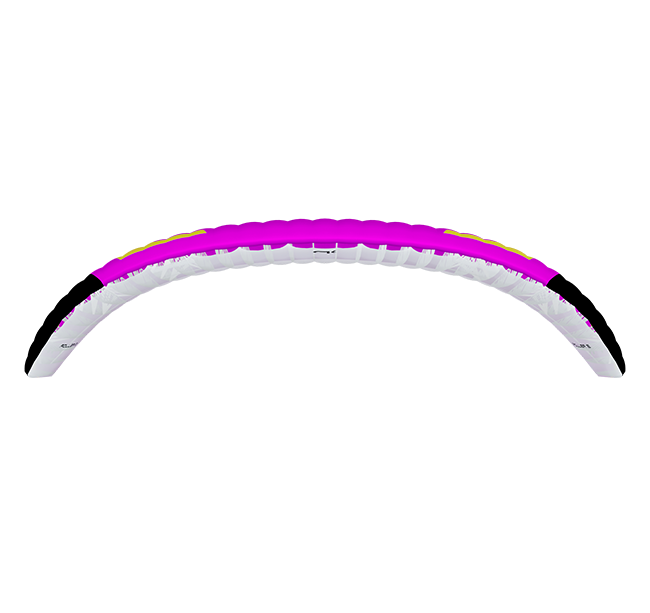
Agile and easy to fly
Due to its weight (3 kg in size 14) and its reduced aspect ratio, the Roller 2 is a very agile and energetic glider. With dynamic handling and responsive manoeuvrability, total control is assured. It is fast and safe in turns.
Excellent performance
A wide speed range, thanks to the efficiency of the speed-bar and trimmers. High performance profile with little drag, so no speed restrictions. It remains solid at all times, especially at high speeds.
Safe manoeuvers
With total passive safety, the Roller 2 is very stable. Some of its technical specifications, such as the aspect ratio and number of cells, are based on its predecessor. Excellent performance thanks to little inertia and drag, with smoother and more precise reactions to inputs.
Stable and responsive
Reaction and precision in lateral turns, with a feeling of total control in the turn. Excellent stability over the entire speed range. Direct, precise and intuitive handling in flight: easy to predict and control.
Launch and landing
Agile and easy to fly
Due to its weight (3 kg in size 14) and its reduced aspect ratio, the Roller 2 is a very agile and energetic glider. With dynamic handling and responsive manoeuvrability, total control is assured. It is fast and safe in turns.
Excellent performance
A wide speed range, thanks to the efficiency of the speed-bar and trimmers. High performance profile with little drag, so no speed restrictions. It remains solid at all times, especially at high speeds.
Safe manoeuvers
With total passive safety, the Roller 2 is very stable. Some of its technical specifications, such as the aspect ratio and number of cells, are based on its predecessor. Excellent performance thanks to little inertia and drag, with smoother and more precise reactions to inputs.
Stable and responsive
Reaction and precision in lateral turns, with a feeling of total control in the turn. Excellent stability over the entire speed range. Direct, precise and intuitive handling in flight: easy to predict and control.
Launch and landing
Easy and progressive inflation which allows a simple launch. Landings are smooth and controlled thanks to perfect speed retention.
Niviuk Technologies
Nitinol rods in the profile
Solid leading edge
The perfect finish
Optimal internal pressure

Structured Leading Edge
Nitinol rods in the leading edge make up the SLE. This technology provides greater solidity and stability to maintain its shape in all phases of flight. This increases performance, efficiency and stability, absorbs turbulence better and makes the wing much more durable over time.
3D Leading Edge
3DL technology is an adjustment of the fabric at the leading edge of the wing to control the ballooning and the creases that are generated by the curvature in this area. The leading edge is then divided into sub-panels which are sewn into each of the cells at the front of the paraglider. As a result, the leading edge of the wing is perfectly tensioned, which benefits the wing in performance and durability.
A good comparison is a rugby ball. In order to produce its characteristic oval shape without creases, its cover is made of several panels – not of just one piece.
The application of this innovation, in conjunction with the 3DP, is key to converting the perfect shape from 2D to 3D.
RAM Air Intake
The RAM Air Intake system is based on the inward orientation of the air inlets in the profile so that they allow an optimum internal pressure at all angles of attack.
The result? Having greater internal pressure means better buffering of turbulence, greater consistency of the profile shape across the speed range. Excellent handling at low speed is achieved by allowing the pilot to extend the braking limit, so there is a lower risk of collapse and consequently, greater control and stability.
3D Pattern Cut Optimization
This technology seeks to implement the best orientation of the cloth on each panel according to its location on the leading edge. If the cloth pattern is correctly aligned with the load axes, the cloth suffers less deformation flight after flight, so the leading edge maintains its shape better and remains stronger over time.
The design of our paraglider and paramotor wings has evolved a lot over the years, with a positive and specific focus on the leading edge.
Thanks to this technology and 3DL, a perfect modelling of the panels and an exact representation from 2D to 3D is achieved.

Titanium Technology
Nitinol is a combination of 50% nickel and 50% titanium. The incorporation of Nitinol rods in the profile increases the performance of the wing, especially in three areas:
- Compared to nylon rods, the weight of the wing is reduced by 13%.
- Nitinol has two essential characteristics: shape memory and enormous elasticity. As a result, the rods retain their optimum shape even after an ultra-compact or incorrect folding, so that the wing is not deformed. This will always be the case unless the radius at the point of curvature is less than 1 cm.
- The leading edge shape is much more rigid and uniform which results in a much more consistent and progressive inflation and therefore an easier take off. The profile is taut at all times, without creases, and fully optimised for all flight phases.
In addition, the rods have a plastic protector at their ends to prevent any damage to the fabric of the wing.
Nitinol is now featured in all our wings.
Nitinol rods in the profile
Solid leading edge
The perfect finish
Optimal internal pressure
Nitinol rods in the profile
The incorporation of Nitinol (TNT Tech) rods in the profile allows the wing to retain its shape without imperfections. The shape memory and the high elasticity of the material are used to ensure that the wing does not deform under any circumstances.
Solid leading edge
SLE technology on the leading edge provides strength and stability. The leading edge shape is rigid and uniform which results in a much more consistent and progressive inflation and therefore an easier take off. Performance and efficiency go hand in hand to aid the durability of the wing.
The perfect finish
Thanks to 3DL and 3DP technologies, excellent profile modelling is achieved. Sewing precision ensures a much cleaner finish to avoid creases and minimise drag.
Optimal internal pressure
The RAM Air Intake system directs the air intakes inwards into the profile to obtain optimum internal pressure at all angles of attack. This makes the wing much more solid over the entire speed range and reduces the risk of collapse.
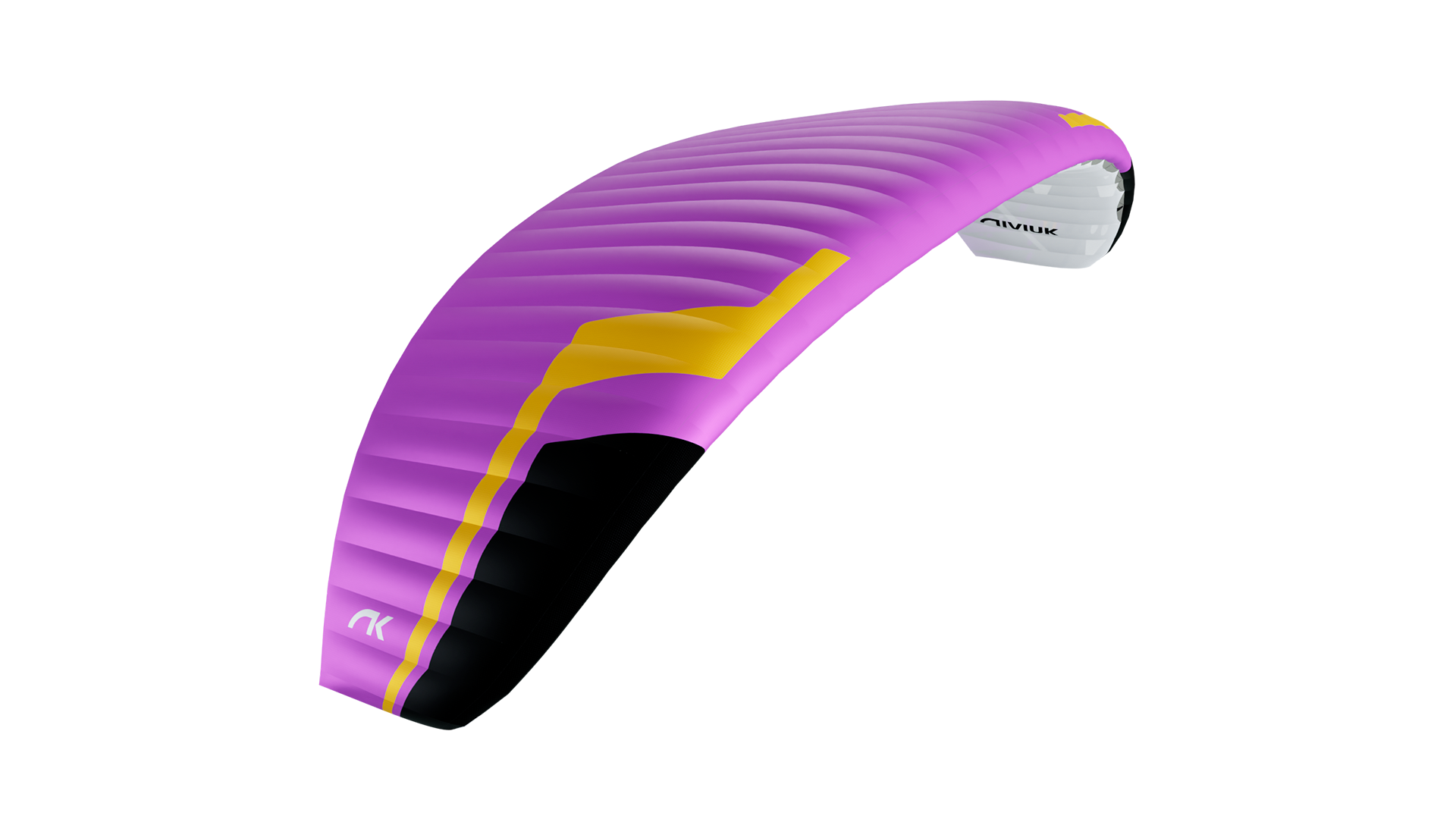
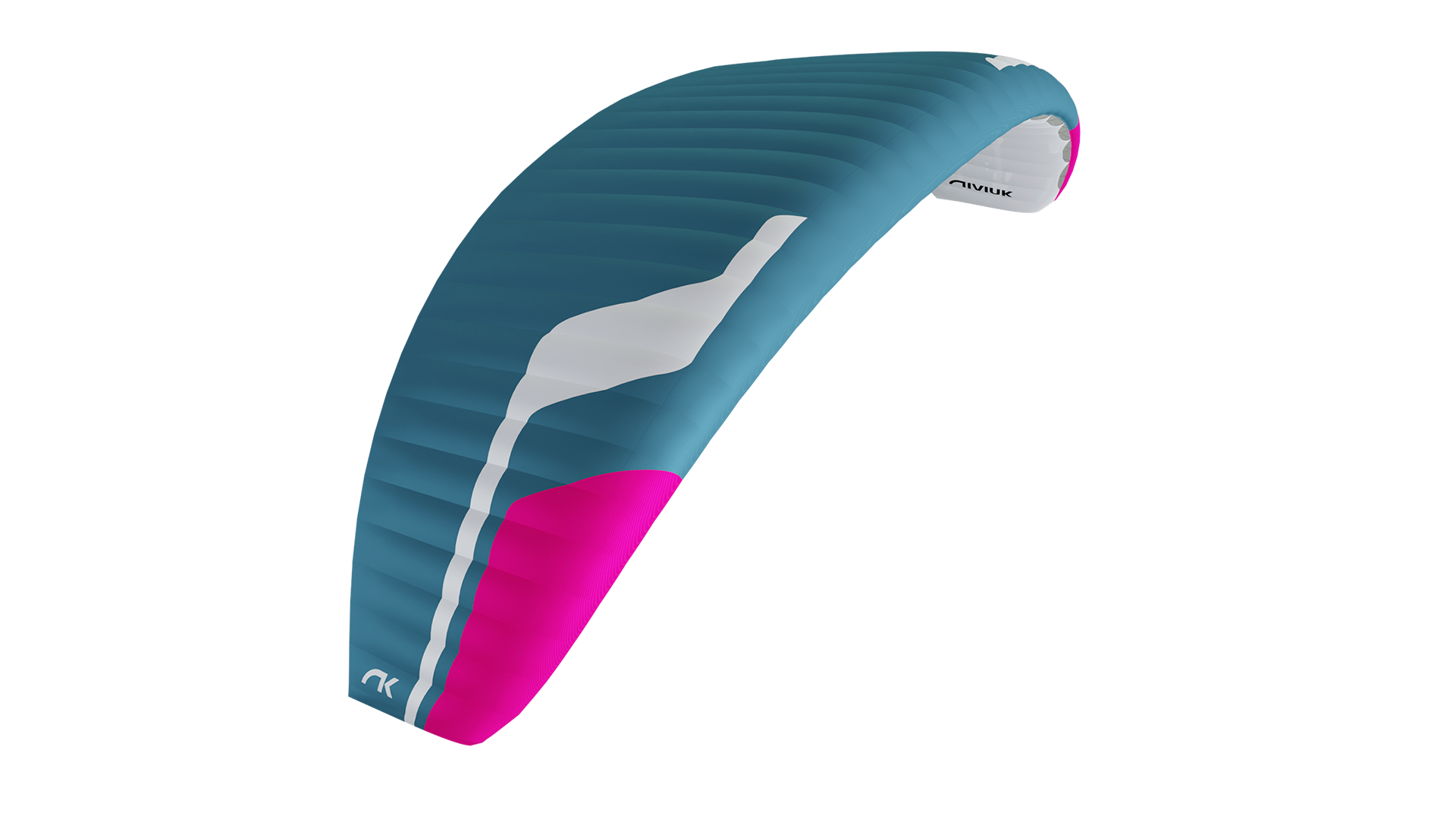
Two colours. Trendy colours.
Configure and order your wing. You can select standard colours or, at additional cost, you can also personalise it and/or add the logos of your choice. As you like it!

Technical specifications
| 14 | 16 | 18 | 20 | |||
|---|---|---|---|---|---|---|
| CELLS | NUMBER | 35 | 35 | 35 | 35 | |
| ASPECT RATIO | FLAT | 4,2 | 4,2 | 4,2 | 4,2 | |
| PROJECTED | 3,6 | 3,6 | 3,6 | 3,6 | ||
| AREA | FLAT | m² | 14 | 16 | 18 | 20 |
| PROJECTED | m² | 12,41 | 14,19 | 15,98 | 17,76 | |
| SPAN | FLAT | m | 7,82 | 8,36 | 8,87 | 9,36 |
| CHORD | MAXIMUM | m | 2,14 | 2,23 | 2,43 | 2,56 |
| LINES | TOTAL | m | 185 | 199 | 211 | 223 |
| MAIN | 2/3/2 | 2/3/2 | 2/3/2 | 2/3/2 | ||
| RISERS | NUMBER | A/B/C | A/B/C | A/B/C | A/B/C | |
| SPEED-BAR | mm | 90 | 90 | 90 | 90 | |
| TRIMMERS | mm | 100 | 100 | 100 | 100 | |
| GLIDER WEIGHT | kg | 3,0 | 3,3 | 3,6 | 3,9 | |
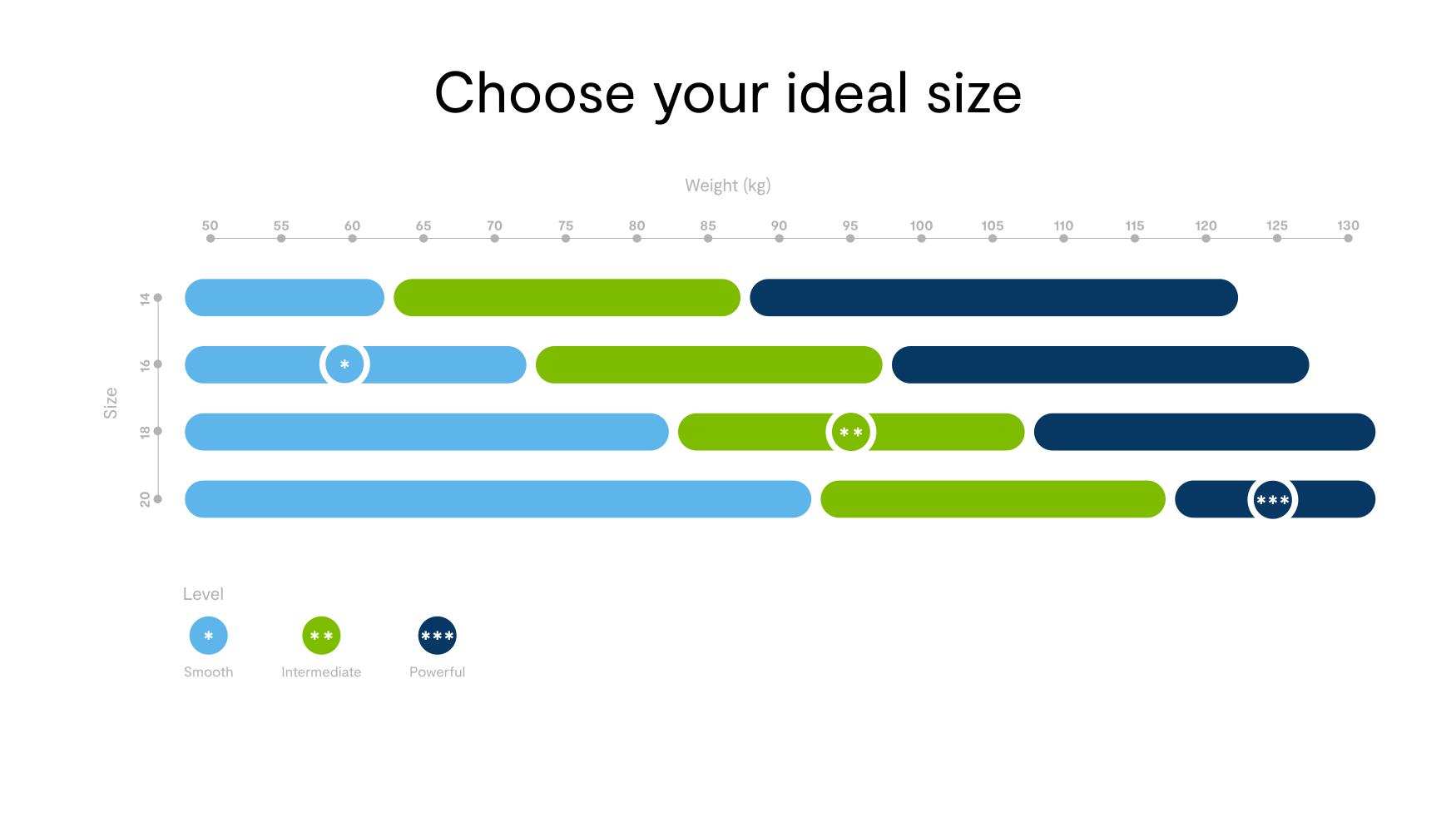
| TOTAL WEIGHT IN FLIGHT | MIN-MAX | kg | 60-90 | 70-100 | 80-110 | 90-120 |
| CERTIFICATION |
EN 926-1
|
EN 926-1
|
EN 926-1
|
EN 926-1
|
The total weight of the wing may differ ±2% due to variations in the weight of the fabric supplied by the manufacturers.
Our wing ROLLER
Comparative chart of the Roller 2 vs Roller.
Roller 2
Roller
10
Safety
10
10
Accessibility
9
10
Stability
9
10
Durability
10
10
Landing
9
10
Take off
9
10
Lightness
10
10
Comfort
9
10
Gliding
9
Packs
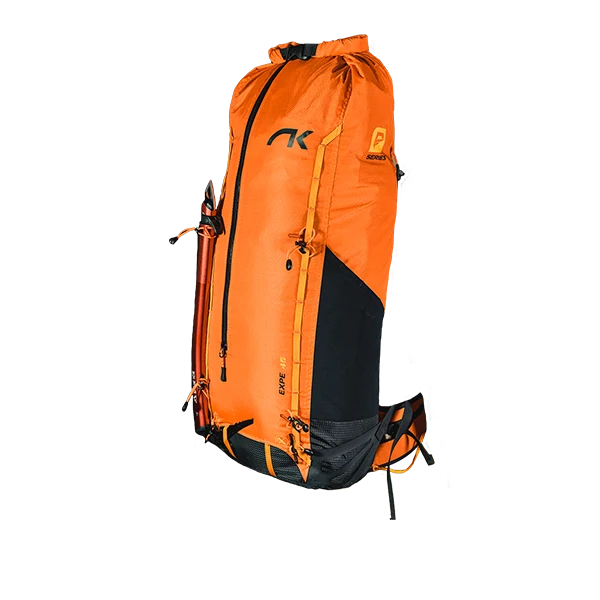
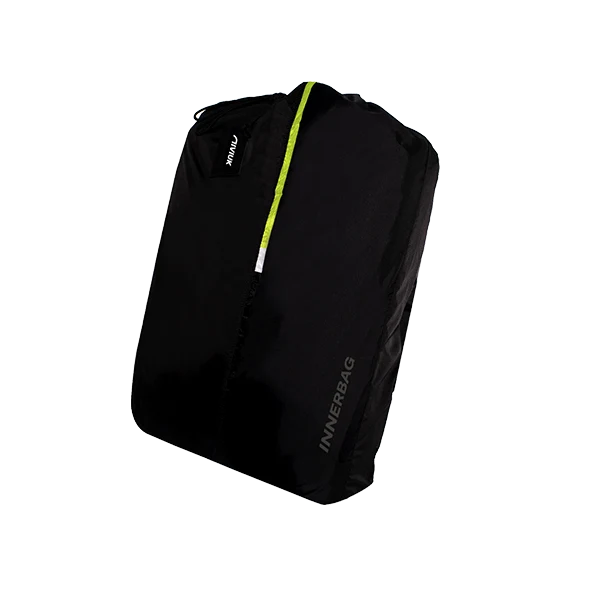
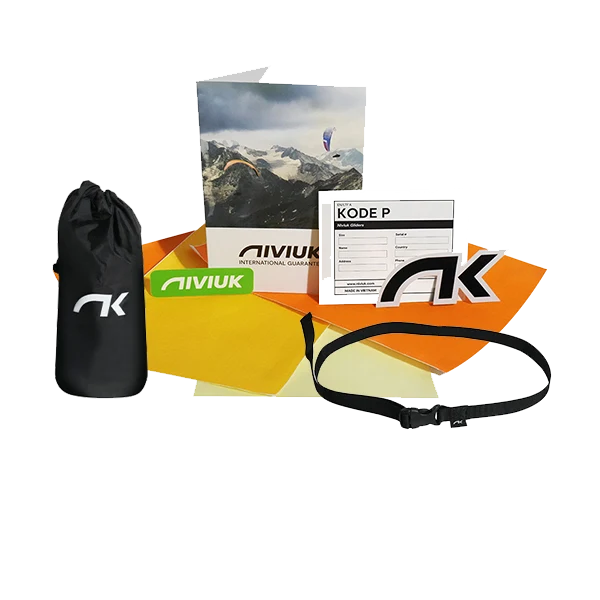
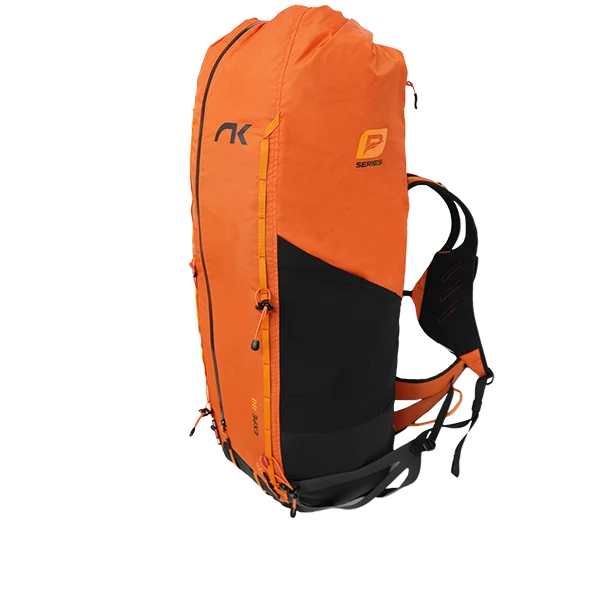
Once you choose the glider size, you will see which accessories are included below, and which rucksack we recommended to be purchased separately with your wing purchase.
Downloads


Related to your
Roller 2
Roller 2
The best guarantee
In order to guarantee the authenticity of the product, Niviuk places the International Guarantee Card inside each wing.
It contains an 8-digit code that, when entered in the MyNiviuk section, can be used for product registration, to carry out procedures and request maintenance.
It contains an 8-digit code that, when entered in the MyNiviuk section, can be used for product registration, to carry out procedures and request maintenance.